Rosemere Neighborhood Association Rotating Header Image

Posts under ‘Safety’

Hanford: Proposed Settlement Could Allow for Decades of Cleanup Delays and “Hottest” Nuclear Waste to be Shipped to Hanford Nuclear Reservation

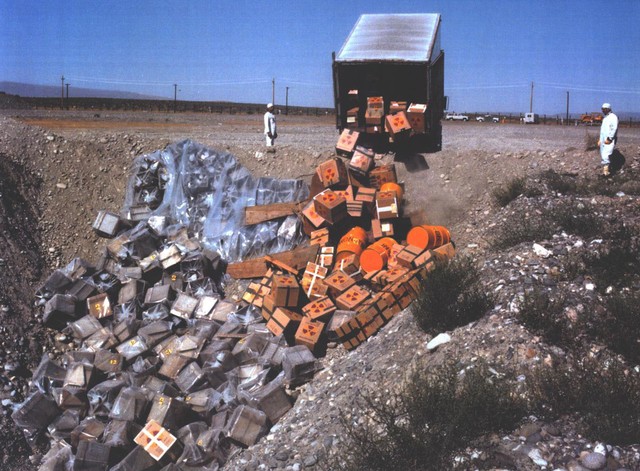
The states of Oregon and Washington, having filed suit against the US Department of Energy in 2008, have negotiated a court-enforceable settlement agreement regarding continuing cleanup activities at Hanford nuclear reservation. Hanford is the most heavily contaminated facility in the western hemisphere with 53 million gallons of radioactive waste at 194 million Curies, the measure of radioactive potency.

The core of the settlement agreement focuses on languishing federal efforts to empty 140 remaining single shell storage tanks of radioactive sludge, and the severely delayed construction of the largest radioactive waste treatment facility in the US. Almost half of the single shell storage tanks are known to be leaking into the soil and to have infiltrated the groundwater in the Hanford plateau. This radioactive spill is moving toward the Columbia River and will reach the shoreline within 20-50 years according to current estimates. A seismic event could increase the speed of travel.

Toxics at Vancouver Lake

Thursday, October 22, marked the 5 year anniversary of the Vancouver Lake Watershed Partnership, created to address longstanding problems that prevent the lake from being swimmable and fishable, including toxic blue green algae.

Patty Boydon, Port of Vancouver Environmental Director, gave a presentation on the installation of an air stripping facility installed to remediate toxic groundwater plumes produced by Cadet/Swan Manufacturing. Groundwater plumes that have expanded into the Fruit Valley Neighborhood were caused by the use of industrial chemical solvents. The shallow groundwater plumes were first discovered in 1998 during road construction, marking the largest groundwater cleanup in Washington State.

Pipe Replacement in Vancouver: Water Main Break at 32nd & Q St.

Water Main Break – September 26, 2009

Rosemere residents were unwinding from a busy week on Saturday night, September 26, 2009.

As relaxing bubble baths were being drawn, water ceased flowing. Those with shampoo in their hair found this most inconvenient, but employees of the City of Vancouver who were wrestling with a broken water main on 32nd & Q St. had bigger problems.

In inky darkness, water was shooting out of the broken main, creating a sinkhole which overflowed, flooding the streets. A city employee was probing the massive hole to test for depth. Suddenly the edge he was standing on gave way, plunging him into the raging waters. After swirling around in the maelstrom for what seemed an eternity, he was able to extract himself to safer grounds.

Water flowed down 32nd towards R St., turning the alley into a churning creek, flooding a home on the corner. The area was a news clip disaster. By Sunday morning, hard working city employees repaired the broken main and filled the sink hole.

Regulation of Perchlorate in Drinking Water

In August, Environmental Protection Agency (EPA) opened a public comment period regarding the potential health impacts from exposure to perchlorate through drinking water. EPA is re-evaluating the need to collect data on the level of health concern, the frequency of occurrence of perchlorate in drinking water, and the opportunity for health risk reduction through a [...]

Lead Pipe Replacement in England & Wales – Part 2

Ancient Lead Pipe, Bath, England

The solution to the lead issue in drinking water would optimally be replacement of all lead piping.

However, there are certain issues:

The ownernership of the lead piping is between the supplier and the property owner, leading to possible legal aspects.
The replacement costs are very high. Approximately 8-10 billion sterling pounds to replace all lead piping in the UK
The density of properties with lead piping can be up to 75% in many cities. The replacment program would create much disruption to road users and property owners
When the lead in water is not visible, tasted, odorless, it is not perceived as a problem. Property owners are then reluctant to take expensive actions.

Corrective Treatment

Comments wanted on Camp Bonneville Cleanup Plans

WA Department of Ecology News Release – May 28, 2009

OLYMPIA – The Washington Department of Ecology (Ecology) seeks comments on draft documents related to cleaning up part of the Camp Bonneville military reservation in Clark County.

This phase of the ongoing cleanup focuses on the Central Impact Target Area. The former artillery target area covers roughly 465 acres.

Raw Sewage Discharged to Burnt Bridge Creek for Years – April 11, 2009

On April 8, City inspections of a local stormdrain system that borders Rosemere found a dangerous cross connection with sewage lines. The problem was identified using specialized remote cameras in the stormdrain system. Unfortunately, the cross connection occurs at the Southwest Regional Office of the Washington State Department of Ecology. This means that raw sewage from a large and heavily staffed state office dedicated to environmental protection has literally been discharging to Burnt Bridge Creek for at least a dozen years.

EPA Places ‘High Priority’ On Completing Munitions Cleanup Guidance – February 18, 2009

(Daily News from InsideEPA.com – February 18, 2009) EPA’s waste office is placing a high priority on finalizing a controversial munitions cleanup policy following months of waiting for the White House Office of Management & Budget (OMB) to address objections raised by the Defense Department over it. The renewed attention to the pending policy for former ranges may signal stepped-up scrutiny from EPA over munitions contamination matters — considered a major cleanup liability for DOD.

RNA Receives letter of support for Camp Bonneville Superfund Petition – February 9, 2009

camp_bonneville

The Rosemere Neighborhood Association has received a letter of support for our Camp Bonneville Superfund Petition from Citizens for Safe Water Around Badger (Wisconsin). CSWAB was organized in 1990 when rural families near Wisconsin’s 7,400-acre Badger Army Ammunition Plant learned that private drinking water wells were polluted with high levels of cancer-causing chemicals. Read the entire document here (Adobe PDF format).

Preliminary Superfund Petition for Camp Bonneville – February 3, 2009

The Rosemere Neighborhood Association has requested that the Environmental Protection Agency conduct a preliminary assessment of the known and suspected release of hazardous substances, pollutants, or contaminants at Camp Bonneville, the former US Military installation in Clark County, Washington (just outside Vancouver). Read the entire document here (Adobe PDF format).

Videos, Slideshows and Podcasts by Cincopa Wordpress Plugin