From Inside Washington Publishers, September 28, 2009. Appears here with permission of the publisher.
Click here to view article (pdf format): Jackson Orders Agency to Speed Civil Rights Claims Reviews

Dedicated to promoting the welfare of our neighborhood, our community, and our environment.
From Inside Washington Publishers, September 28, 2009. Appears here with permission of the publisher.
Click here to view article (pdf format): Jackson Orders Agency to Speed Civil Rights Claims Reviews

Heart of America NW is holding a free screening of the documentary ARID LANDS at the Unitarian Universalist Fellowship in Vancouver, WA.
ARID LANDS is a internationally acclaimed documentary is about the land and people of the Columbia River Basin in Eastern WA – home to the Hanford nuclear site – the largest environmental clean-up in history.
It is a land of incredible contradictions: coyotes roam among reactors, salmon spawn in the middle of golf courses and federal dollars spur rapid expansion.
When: October 12, 2009
07:00 PM – 09:30 PM – Film Screening: Vancouver, WA Arid Lands Screening
Location: Unitarian Universalist Church of Vancouver 4505 E. 18th St, Vancouver, WA, 98661 US
MapQuest! | GoogleMaps
Contact: email
Website: http://www.sidelongfilms.com

FOR IMMEDIATE RELEASE
Contacts:
Chris Winter
CRAG Law Center
Dvija Michael Bertish
Rosemere Neighborhood Association
ROSEMERE NEIGHBORHOOD ASSOCIATION WINS LANDMARK ENVIRONMENTAL JUSTICE CASE AGAINST EPA’S OFFICE OF CIVIL RIGHTS
Ninth Circuit Court of Appeals Criticizes EPA for a “Pattern of Delay” in Implementing Title VI of the Civil Rights Act
(September 18, 2009) Rosemere Neighborhood Association (“Rosemere”) is a non-profit community organization in Clark County, Washington, dedicated to environmental protection and the pursuit of improvements to low-income environmental justice communities.
In February 2003, Rosemere first filed a Title VI administrative complaint with EPA’s Office of Civil Rights (“OCR”) alleging that the City of Vancouver, WA had discriminated in the provision of municipal services in violation of the Civil Rights Act of 1964. Rosemere alleged that Vancouver failed to use EPA funds to address fairly long-standing problems in low-income and minority neighborhoods in West Vancouver.
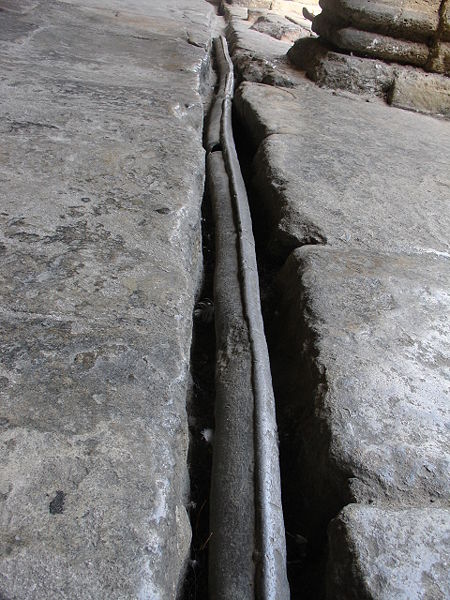
Ancient Lead Pipe, Bath, England
The solution to the lead issue in drinking water would optimally be replacement of all lead piping.
However, there are certain issues:
Corrective Treatment
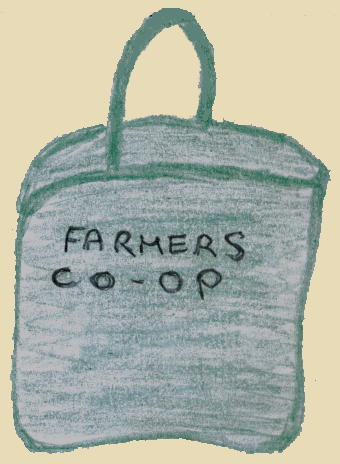 The inconvenient “good old” days contained some very “good old” ecological ways.
I grew up seventy-two years ago in a small seaside town in England. To anyone under thirty-five, seventy-two is ancient; the rest of us marvel at how fast time passes. With no refrigeration, you shopped once a week or you ate something out of a can for dinner.
Before plastic, people all over the world used some sort of cloth shopping bag. It might be a fancy store-bought item or something simple, sewn from a piece of left over cotton. The burlap that potatoes used to come in made useful shopping bags.
Thankfully the cloth bag has re-appeared, but the supermarkets still have thick rolls of smaller plastic bags for vegetables and bulk items and the ‘I will not disintegrate for about twenty thousand years’ plastic bags are still very much in place.