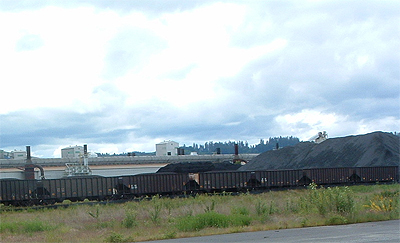
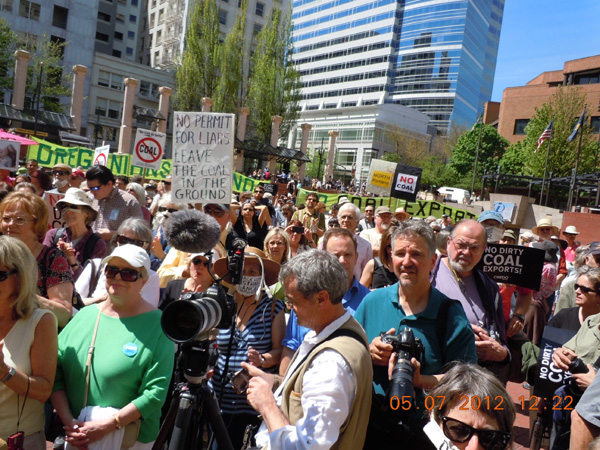
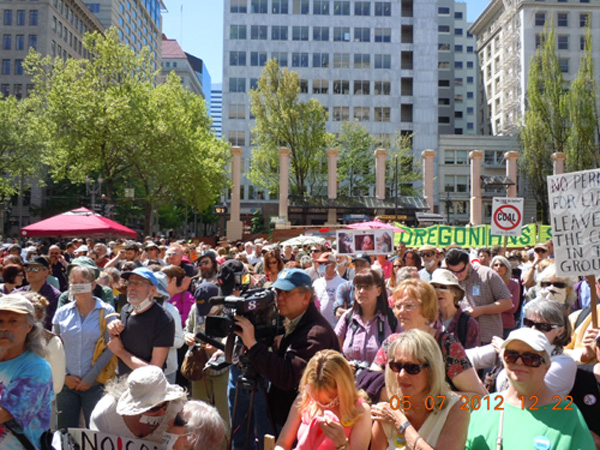
More than 20% of our Electricity in Washington comes from Coal.
Coal is our nation’s dirtiest energy souce. But few Washingtonians realize that the TransAlta coal plan in Centralia bruns roughly 4 million tons of coal each year.
TransAlta coal plant is the largest single source of pollution in Washington.
Toxic pollution from coal plants contributes to heart and ling disease, cancer, stroke and premature death.
The TransAlta coal plant is Washington’s biggest polluter of toxic mercury. Mercury pollutes the water we drink, the fish we eat, and is especially dangerous to children and womena who are pregnant or may become pregnant.
Dirty coal can be replaced with clean energy solutions that will reduce pollution and protect our health.
The states of Oregon and Washington, having filed suit against the US Department of Energy in 2008, have negotiated a court-enforceable settlement agreement regarding continuing cleanup activities at Hanford nuclear reservation. Hanford is the most heavily contaminated facility in the western hemisphere with 53 million gallons of radioactive waste at 194 million Curies, the measure of radioactive potency.
The core of the settlement agreement focuses on languishing federal efforts to empty 140 remaining single shell storage tanks of radioactive sludge, and the severely delayed construction of the largest radioactive waste treatment facility in the US. Almost half of the single shell storage tanks are known to be leaking into the soil and to have infiltrated the groundwater in the Hanford plateau. This radioactive spill is moving toward the Columbia River and will reach the shoreline within 20-50 years according to current estimates. A seismic event could increase the speed of travel.
Heart of America NW is holding a free screening of the documentary ARID LANDS at the Unitarian Universalist Fellowship in Vancouver, WA.
ARID LANDS is a internationally acclaimed documentary is about the land and people of the Columbia River Basin in Eastern WA – home to the Hanford nuclear site – the largest environmental clean-up in [...]
Energy Northwest has withdrawn its application for the Pacific Mountain Energy Facility (PMEC) in a letter this month saying, “Our efforts have determined that the financial and economic conditions do not support a project of this size.”
Originally slated to be a $1.5 billion coal gasification plant, Energy Northwest had amended its plans for a coal powered plant in favor of natural gas in response to environmental objections raised by the Rosemere Neighborhood Association and Columbia Riverkeeper, Willapa Audubon Society, Washington Environmental Council, Sierra Club’s Cascade Chapter and Northwest Energy Coalition.
A public meeting and hearing was conducted by the Hanford Tri-Party Agencies to discuss a tentative agreement to modify cleanup action plans at the Hanford Nuclear Reservation. Tri-Party officials present included Matt McCormick, Dave Brockman, and Stacy Charboneau, U.S. Department of Energy; Ron Skinnarland, Washington State Department of Ecology; and Rod Lobos, US Environmental Protection Agency.
Bonneville Dam
Bonneville Dam
On the last day of June, 2008, a surge of wind power caused a spike in the Northwest power grid, making the Bonneville Power Administration realize it could not handle such surges without spilling water that could be potentially dangerous to Columbia River salmon.
The BPA was “caught off guard” when an unexpected increase in wind power overloaded the regional grid. The Bonneville dam compensated by spilling water, keeping it from the hydropower generators. Generally, water is spilled to help juvenile salmon make their way downriver; however, excessive nitrogen, created when water plunging from the dams into the river becomes saturated with air (which is composed of 78% nitrogen), can be harmful to salmon. In this instance the BPA claimed the spill was not heavy enough to damage fish.
Indiana coal gasification plant
This is a 2544-ton-per-day coal gasification plant on the Wabash River in Indiana. (Photo: Department of Energy)
Our efforts to block the coal fired power plant in Kalama have been successful. In their meeting held on September 9, 2008, the State of Washington Energy Facility Site Evaluation Council announced that The Pacific Mountain Energy Center in Kalama is being redesigned as the Kalama Energy Project. The newly renamed project will eliminate all the gasification facilities originally planned for the site and run exclusively on natural gas.
Solar energy
Advancement for solar energy was attained in 2005 by the State of Washington.
“This is the most important solar legislation ever introduced in any American state legislature.”
– Denis Hayes, founder of Earth Day, former director of the federal Solar Energy Research Institute and current President of the Bullitt Foundation
Two bills — SB5101 and SB5111 — won overwhelming bipartisan support from lawmakers interested in growing solar manufacturing and installation within the state.
Posted 12:15 PM, October 3, 2007
FOR IMMEDIATE RELEASE
October 2, 2007
Contacts:
Brett VandenHeuvel, Columbia Riverkeeper. 503 224-3240. bv@columbiariverkeeper.org
Dvija Michael Bertish, Rosemere Neighborhood Association. 360-281-4747.
Environmental Groups Challenge Proposed Climate Polluting, Coal Fueled, Power Plant in Kalama, WA.
Seeking to stop a power plant that would spew millions of tons of toxic greenhouse gasses and other contaminants into Washington State skies, Columbia Riverkeeper, Willapa Audubon Society, and Rosemere Neighborhood Association have been granted the legal status to intervene in the permitting process for Energy Northwest’s proposed 680-megawatt coal-fueled Integrated Gasification Combined Cycle (IGCC) power plant in Kalama. A total of six environmental groups will intervene in objection to the proposed coal-fueled power plant, along with the State Attorney General’s Office and the Washington State Department of Ecology.
2007 NEWSLETTER
SEPTEMBER 2007 NEWSLETTER
PROPOSED COAL-BURNING POWER PLANT
On September 20, 2007, representatives of Columbia Riverkeeper, Willapa Audubon Society, and the Rosemere Neighborhood Association, along with a number of other concerned citizens, attended a public hearing held by Washington’s Energy Facility Site Evaluation Council to voice their opinions about Energy Northwest’s proposed Integrated Gasification Combined Cycle (IGCC) power plant in Kalama, WA. The council took comments from the public on Energy Northwest’s greenhouse gas “sequestration plan” (view the plan at http://http:www.esfec.wa.gov/pmec.shtml).