Rosemere Neighborhood Association Rotating Header Image

Posts Tagged ‘burnt bridge creek’

Raw Sewage Discharged to Burnt Bridge Creek for Years – April 11, 2009

On April 8, City inspections of a local stormdrain system that borders Rosemere found a dangerous cross connection with sewage lines. The problem was identified using specialized remote cameras in the stormdrain system. Unfortunately, the cross connection occurs at the Southwest Regional Office of the Washington State Department of Ecology. This means that raw sewage from a large and heavily staffed state office dedicated to environmental protection has literally been discharging to Burnt Bridge Creek for at least a dozen years.

State Studies Water Quality Failures on Burnt Bridge Creek – March 11, 2009

On March 11, 2009, The Washington State Department of Ecology convened the technical advisory committee for the Total Maximum Daily Load study currently underway for Burnt Bridge Creek. This creek begins as a spring in East Vancouver, and flows 13 miles westward into Vancouver Lake. Monitoring stations have been established at various locations along the stream path. The study includes tributaries — Cold Creek, Petersen Channel and Burton Channel. Burnt Bridge Creek suffers from failures of various water quality standards, and the purpose of this study is to determine how to remedy the problems and improve water quality.

Data Gathered for Vancouver Lake Superfund Assessment – March 4, 2009

In August, 2007, RNA and Columbia Riverkeeper submitted a formal Citizen Petition for the Environmental Protection Agency (EPA) to conduct a Preliminary Assessment to consider Vancouver Lake a superfund site due to contamination from substances like PCBs. The Citizen’s Petition scored sufficiently for EPA to to move to the next step, which is a site inspection study. Contractors for the EPA arrived in Vancouver to gather around 30 sediment samples that will be shpped out of state for analysis at federally contracted laboratories.

Clams and Crayfish Used to Study Waterborne Contaminants – January 6, 2009

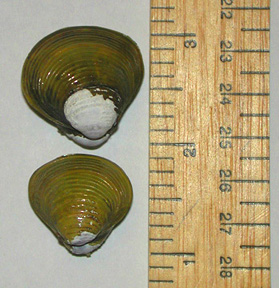
Asian clams collected at Frenchman’s Bar, Vancouver

Recent water quality monitoring efforts in the Columbia River have relied upon the analysis of clam tissue to determine the levels of dangerous toxins that have been absorbed by aquatic organisms. In Vancouver, high levels of PCBs, a cancer-causing agent, have been identified in clam tissues taken from samples in front of Alcoa at the Port of Vancouver, and downstream toward the mouth of the flushing channel to Vancouver Lake.

Local View: Stormwater Pollution is a Critical Issue for Clark County – Sunday, December 14, 2008

This editorial was published by the Columbian newspaper:

Sunday, December 14, 2008
By Dvija Bertish, Rosemere Neighborhood Association and Lauren Goldberg, Toxics and Conservation Director, Columbia Riverkeeper

The recent story regarding the City of Vancouver’s move to increase protections for our local creeks and rivers from the stormwater that carries thousands of pounds of heavy metals, pesticides, and oil from city streets should be welcome news to everyone who values clean water, salmon or the chance for your family to enjoy a swim in a local river or lake.

LETTER TO THE EDITOR RE: Railroad Trestle – April 1, 2008

Posted 12:15 AM, April 13, 2008

Submitted to The Columbian, April 1, 2008

Last November 2007, the Columbian published an article “Tussle Over Trestle”. Local citizen, Ed Swindell, noted that a collapsed creosote laden railroad trestle was probably polluting Burnt Bridge Creek and it should be removed. This initiated finger pointing between Clark County and BNSF Railway over whose mess this was. Neither was inclined to claim property ownership.

ROSEMERE NEIGHBORHOOD ASSOCIATION NEWSLETTER – SEPTEMBER 2007

2007 NEWSLETTER

SEPTEMBER 2007 NEWSLETTER

PROPOSED COAL-BURNING POWER PLANT

On September 20, 2007, representatives of Columbia Riverkeeper, Willapa Audubon Society, and the Rosemere Neighborhood Association, along with a number of other concerned citizens, attended a public hearing held by Washington’s Energy Facility Site Evaluation Council to voice their opinions about Energy Northwest’s proposed Integrated Gasification Combined Cycle (IGCC) power plant in Kalama, WA. The council took comments from the public on Energy Northwest’s greenhouse gas “sequestration plan” (view the plan at http://http:www.esfec.wa.gov/pmec.shtml).

SETTLEMENT REACHED IN LOCAL CLEAN WATER CASE – May 19, 2006

Approved Joint Public Statement

The City of Vancouver, Clark County Natural Resources Council and Rosemere Neighborhood Association have reached a mutually satisfactory agreement that ends the appeals of a 2005 judgement in a Clean Water Act lawsuit heard by the Federal District Court for the Western District of Washington. The joint agreement furthers the goals of all three parties by enhancing ongoing efforts to protect and improve the community’s water resources. Additional water monitoring, inventory work and public involvement opportunities, including creation of a Burnt Bridge Creek Watershed Council, are among the highlights of the agreement.

Approved Settlement Agreement, Signed May 2006

Rosemere Neighborhood Association and Clark County Natural Resources Council File Supplemental 60-Day Notice of Intent to Sue Under the Clean Water Act – April 8, 2005

The RNA and CCRNC filed a Clean Water Act lawsuit in October 2004 against
the City of Vancouver pertaining to the City’s unpermitted and contaminated stormwater discharge into Burnt Bridge Creek, and the Columbia River (both of which flow into Vancouver Lake). These discharges into threatened or endangered waterbodies are conveyed through the municipal stormwater sewer system.

On April 1, 2005, RNA and CCNRC’s attorneys filed a supplemental notice of
intent to sue the City of Vancouver under the Clean Water Act for
unpermitted and contaminated non-stormwater related discharges. The city’s municipal stormwater system illegally conveys discharges into Burnt Bridge Creek and the Columbia River on a daily basis during dry weather. These discharges travel to and can impact the water quality of Vancouver Lake.

FISH IN VANCOUVER LAKE ARE CONTAMINATED AND UNSAFE FOR HUMAN CONSUMPTION – November 1, 2004

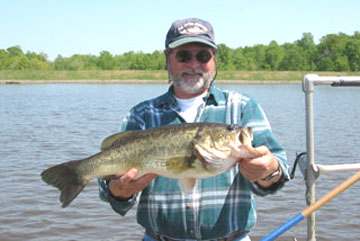
bass
Largemouth Bass

Anglers frequent fishing spots along the Columbia River and Vancouver Lake, and have done so for many years. However, Toxic Monitoring Data from the Washington State Department of Ecology indicates that fish in Vancouver Lake are not safe to eat. This is particularly dangerous for low-income folks who fish in this area out of necessity.

Videos, Slideshows and Podcasts by Cincopa Wordpress Plugin